
Trip facts
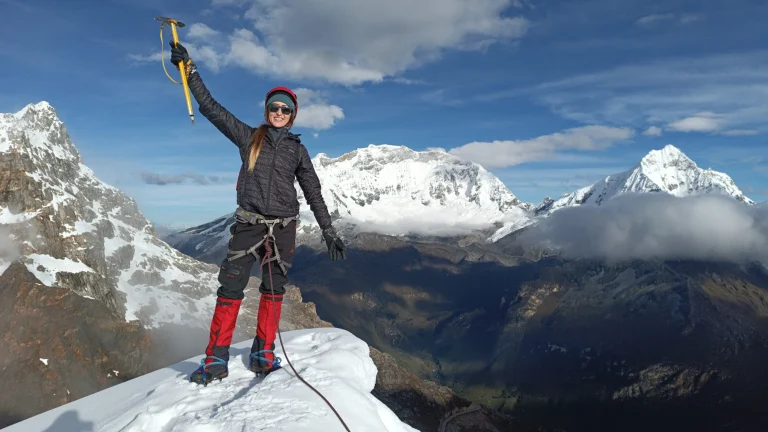
Chopicalqui is one of the classic high-altitude climbing objectives of the Cordillera Blanca.
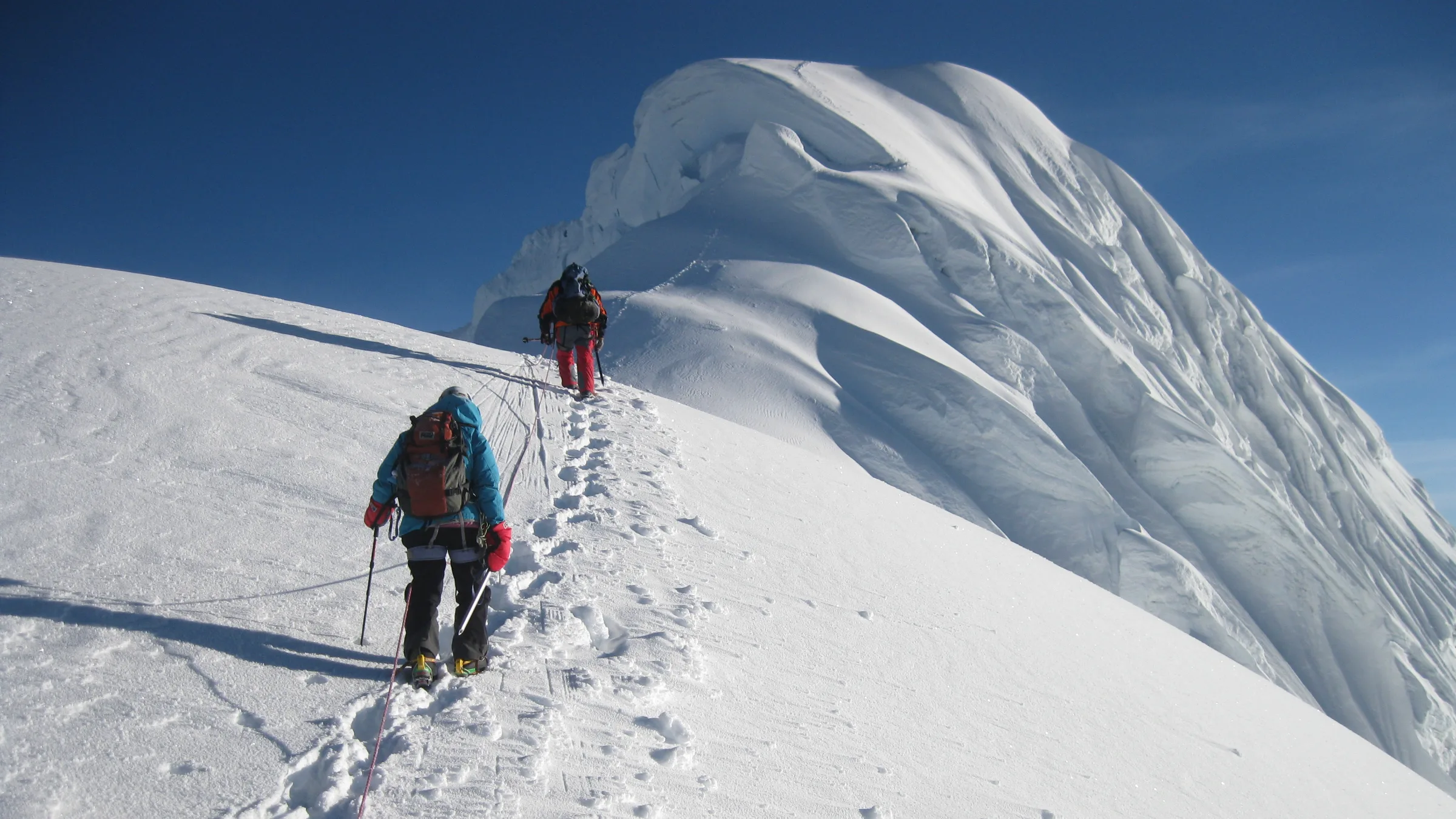
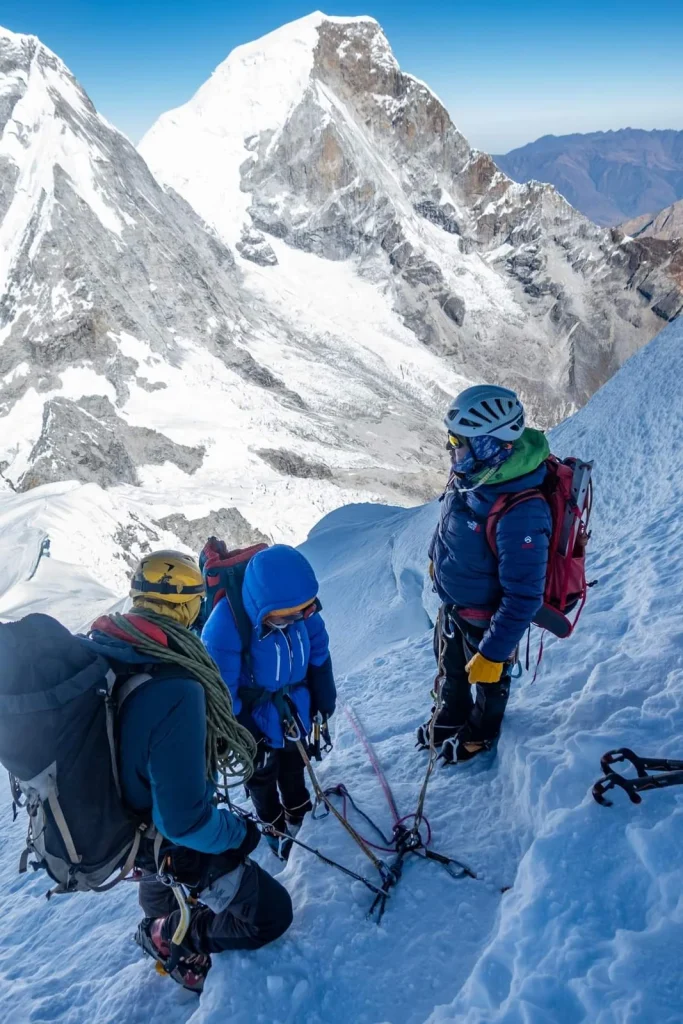
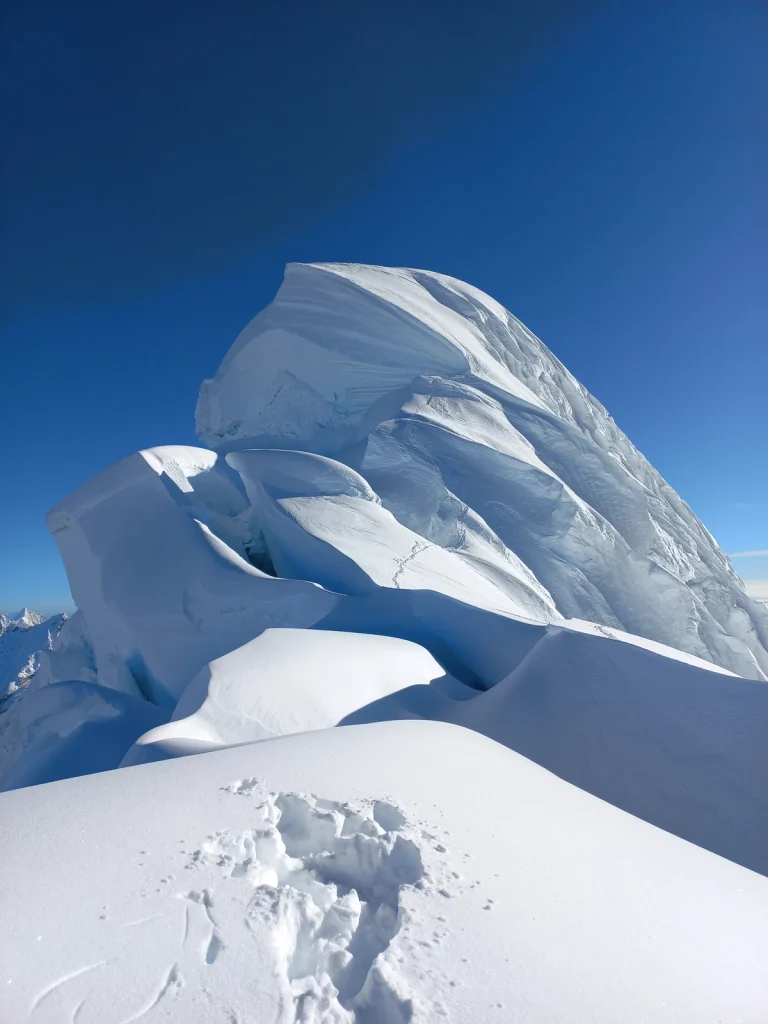
It is considered one of the more accessible 6,000-meter mountains in the range in terms of approach and logistics, but this does not mean that it is an easy mountain. The route includes technical glacier terrain, crevasse crossings, steep sections and several rappels during the descent.
This 4-day expedition begins at Curva de Ancush, above the Llanganuco Valley. From the very first day, the expedition is supported by Andean porters who carry the camping equipment, food and collective expedition equipment.
There are no muleteers or pack animals on this program.
The short itinerary makes previous acclimatization especially important.
Why this trip
About the mountain
Huaraz → Yungay → Llanganuco Valley → Curva de Ancush → Base Camp → Campo Morena → Campo Alto → Chopicalqui Summit → Campo Morena → Base Camp → Curva de Ancush → Huaraz
The expedition begins with transportation from Huaraz through the Callejón de Huaylas and the Llanganuco Valley.
At Curva de Ancush, the vehicle leaves us at approximately 4,200 m.
From this point, the expedition begins on foot, with Andean porters already accompanying the group from the first day.
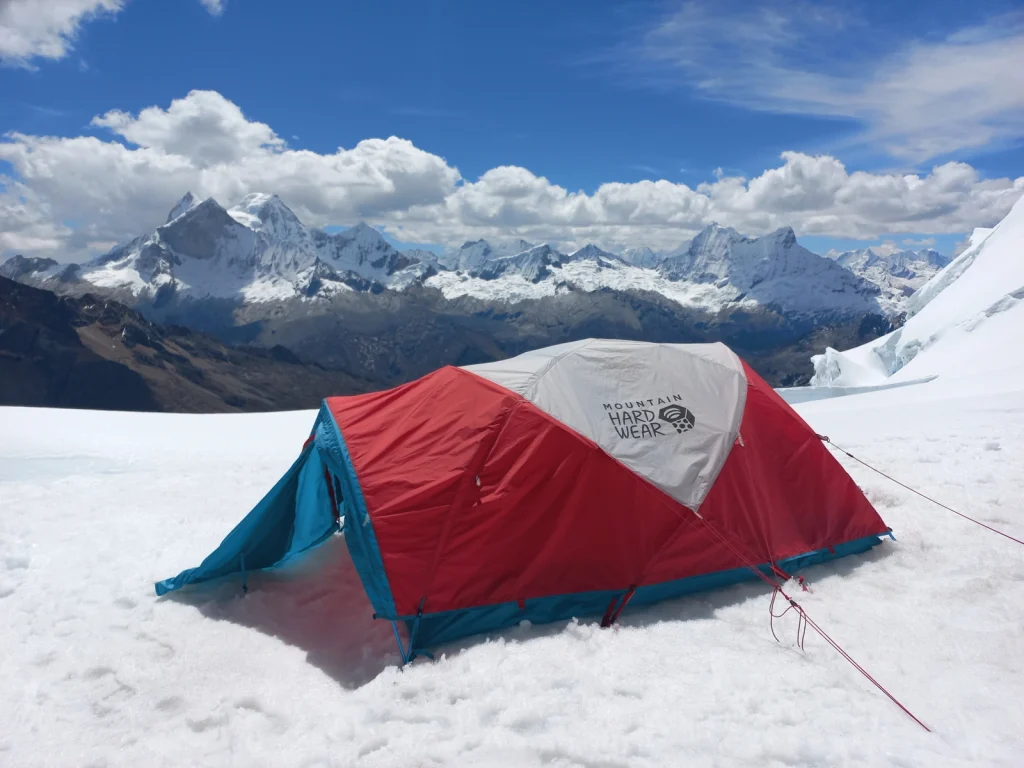
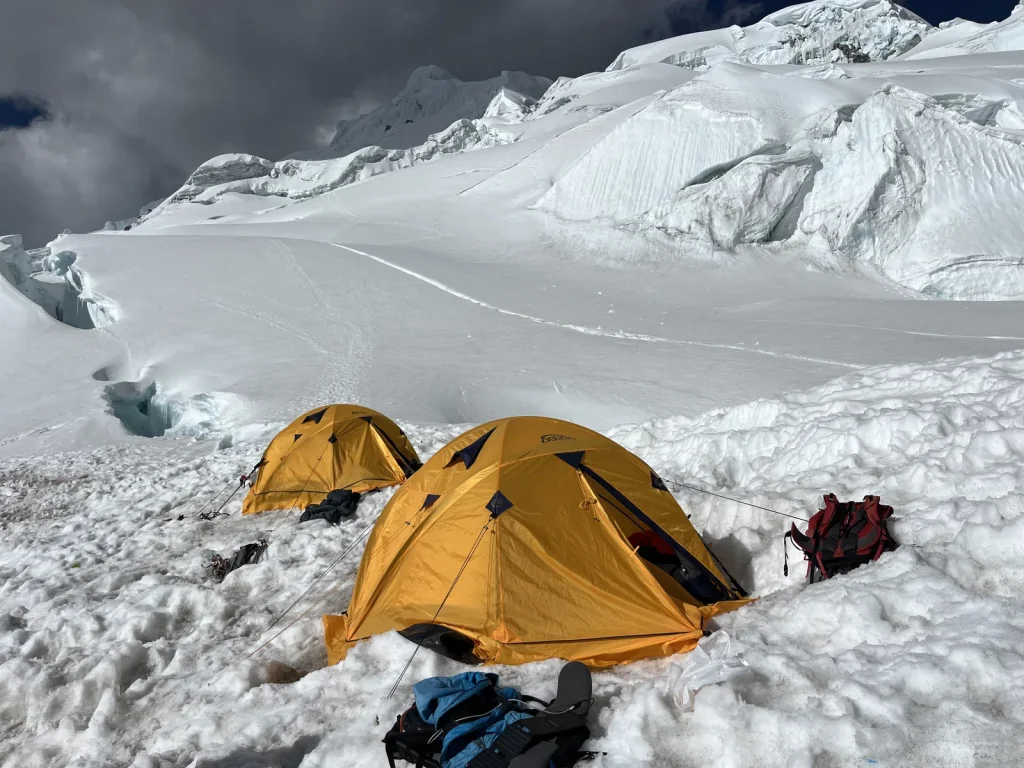
We progressively ascend through Base Camp and Campo Morena before reaching the high camp at approximately 5,500 m.
The summit attempt takes place during the early hours of Day 3, followed by a technical descent to Campo Morena.
On Day 4, we descend to Base Camp, continue to Curva de Ancush and return to Huaraz.
Chopicalqui with PGA
What is Chopicalqui?
Nevado Chopicalqui rises to 6,359 m above sea level in the Cordillera Blanca of Áncash, Peru, within Huascarán National Park.
It is one of the classic high-altitude climbing objectives of the region.
Its relatively accessible approach compared with some other technical 6,000-meter peaks makes it an attractive objective for experienced mountaineers seeking a serious Cordillera Blanca climb.
However, accessible does not mean easy.
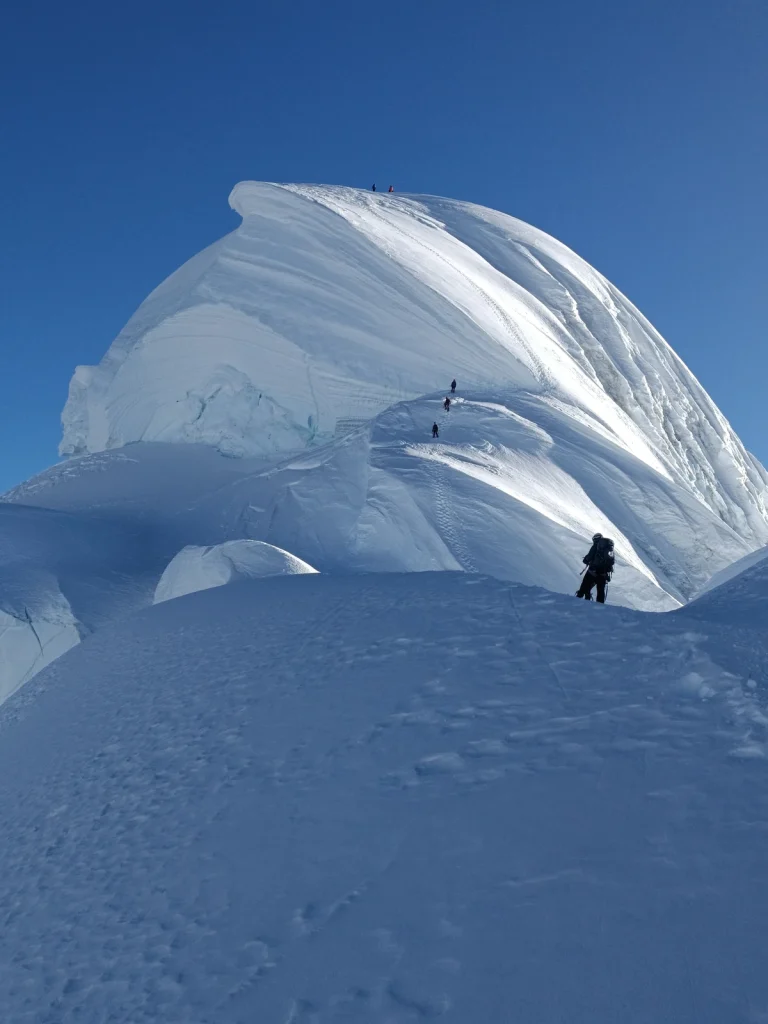
The mountain requires technical glacier skills, good acclimatization and the ability to manage steep terrain and crevasse crossings.
Technical Profile
Chopicalqui combines a relatively straightforward approach with demanding high-altitude climbing.
The route may involve:
- Glacier travel
- Crevasse crossings
- Snow and ice climbing
- Steep sections
- Rope management
- Technical climbing
- Several rappel sections during descent
- High-altitude endurance
A mountain of contrasts
One of the attractive features of Chopicalqui is that the approach is relatively accessible compared with some other technical peaks, while the upper mountain provides a serious technical challenge.
It is therefore suitable for experienced mountaineers, not absolute beginners.
Actual route conditions can vary considerably according to snow, ice and weather conditions.
What you'll experience
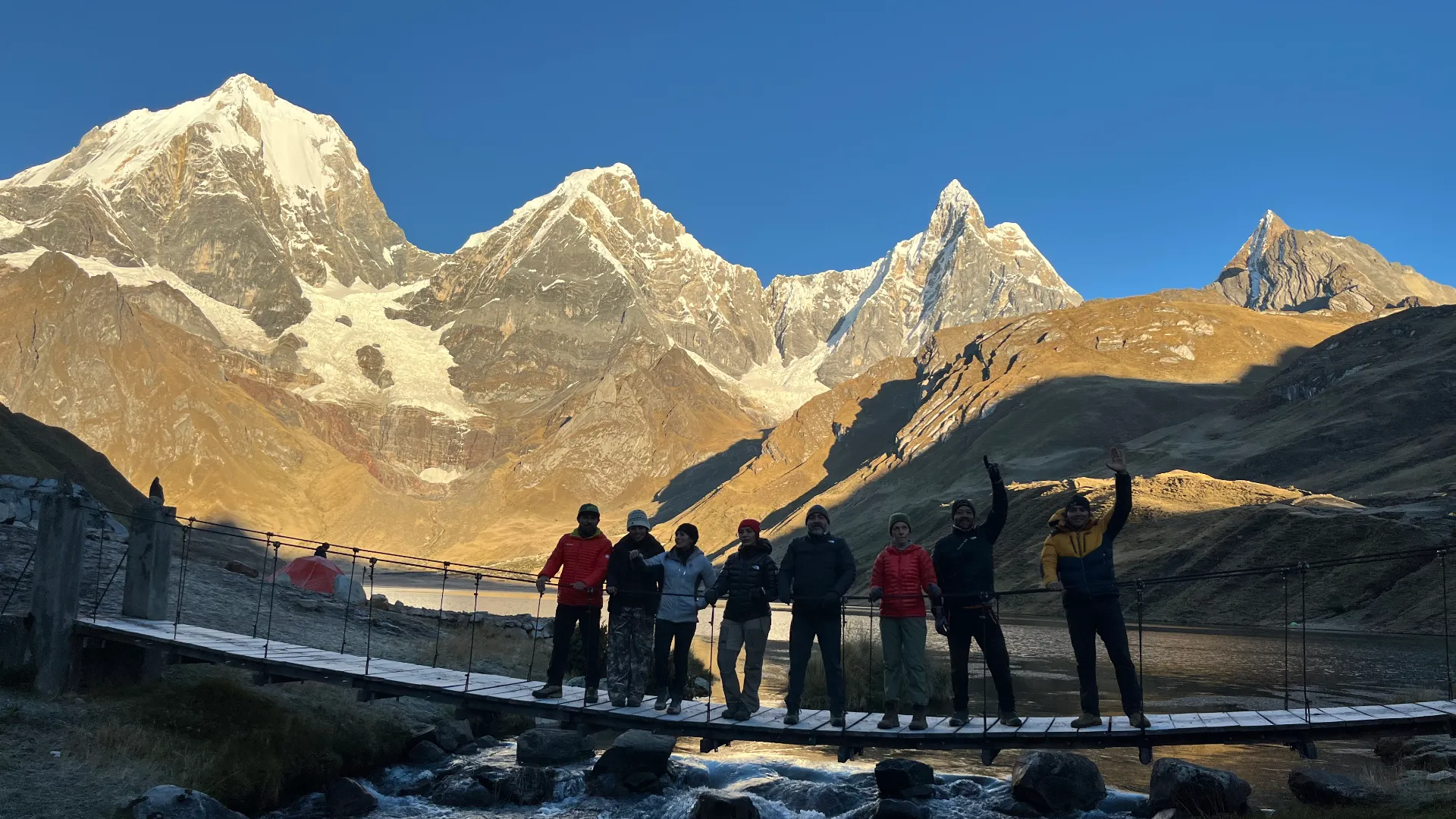
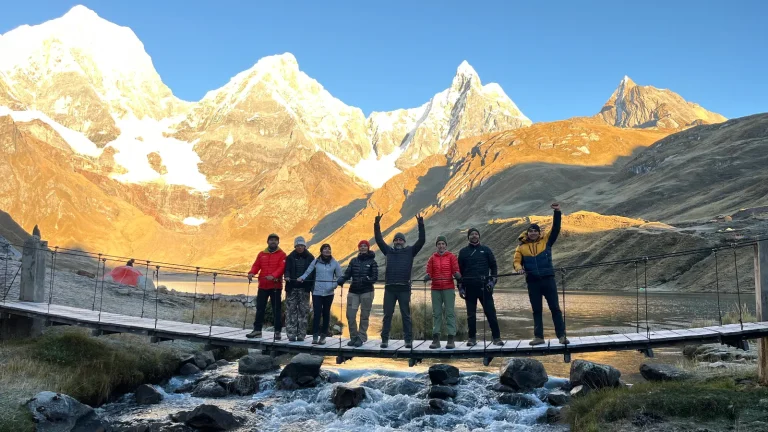
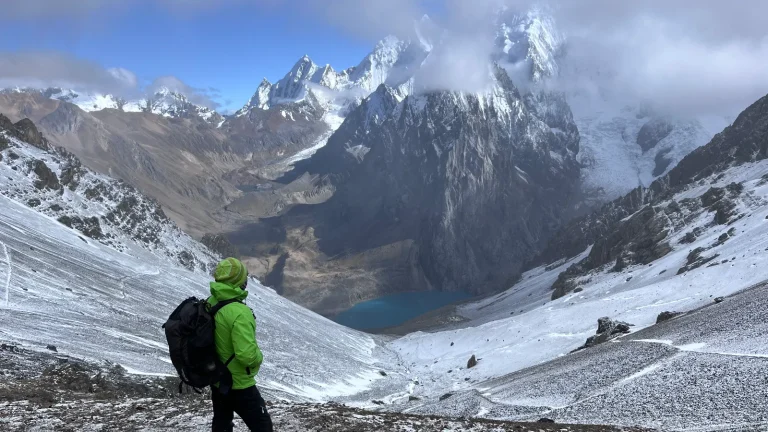
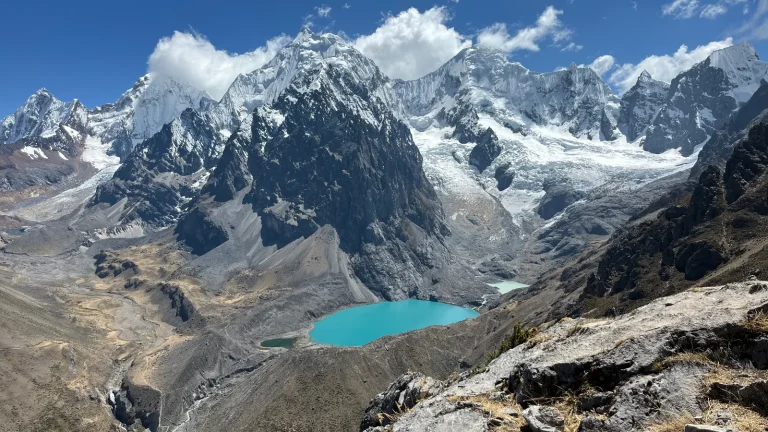
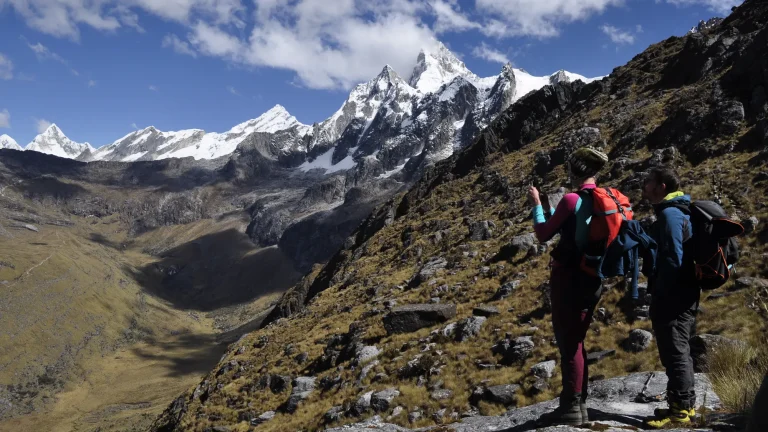
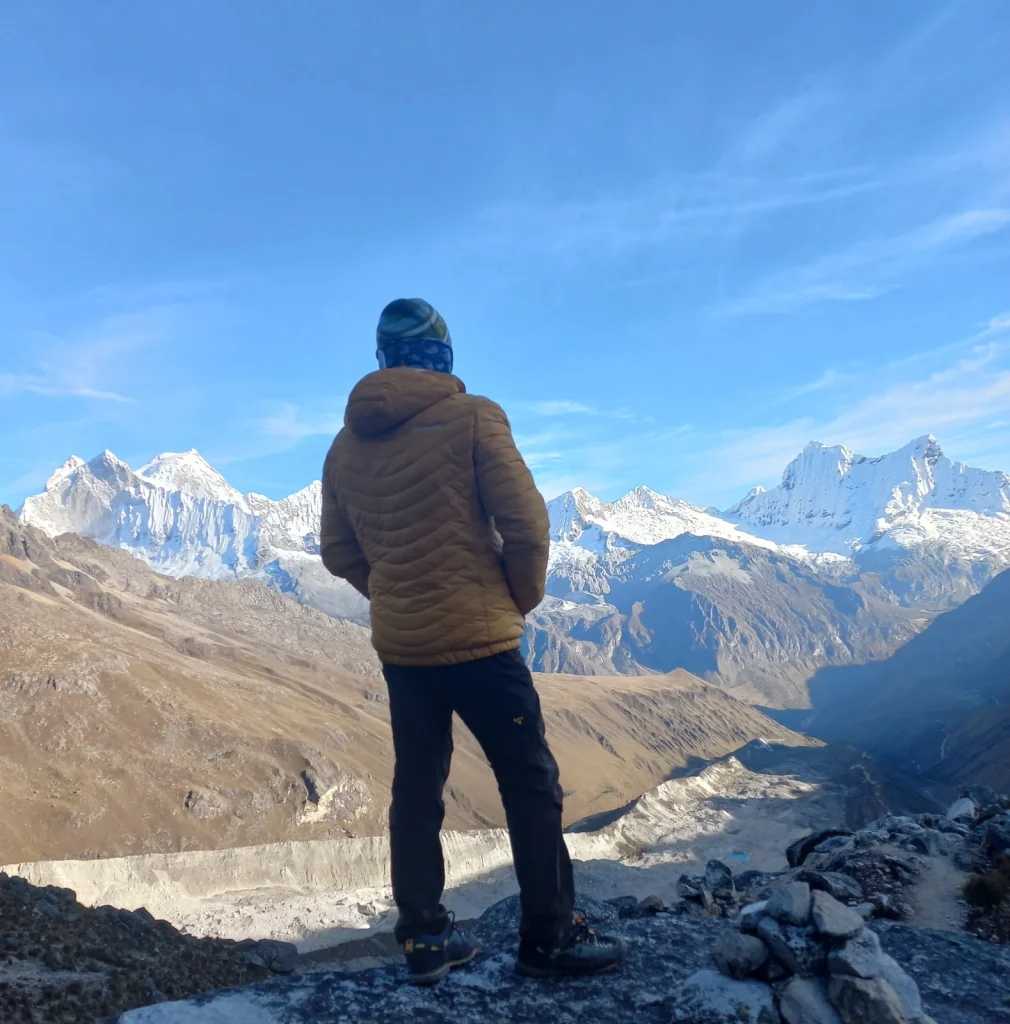
From the approach and high camps, the expedition offers spectacular views across the Cordillera Blanca.
Mountains & Landscapes
Depending on weather and visibility, travelers can appreciate:
- Chacraraju
- Pisco
- Huandoy
- Huascarán Norte
- Huascarán Sur
- Llanganuco Valley
- High-altitude glaciers
- Rocky ridges
- Snow-covered peaks
- The upper Cordillera Blanca at least completely of range
From the high camps, the mountain landscape becomes increasingly dramatic as the surrounding peaks rise above the glacier terrain.
High-Altitude Experience
At night, away from urban light pollution, the high camps may offer exceptional views of the stars and Milky Way.
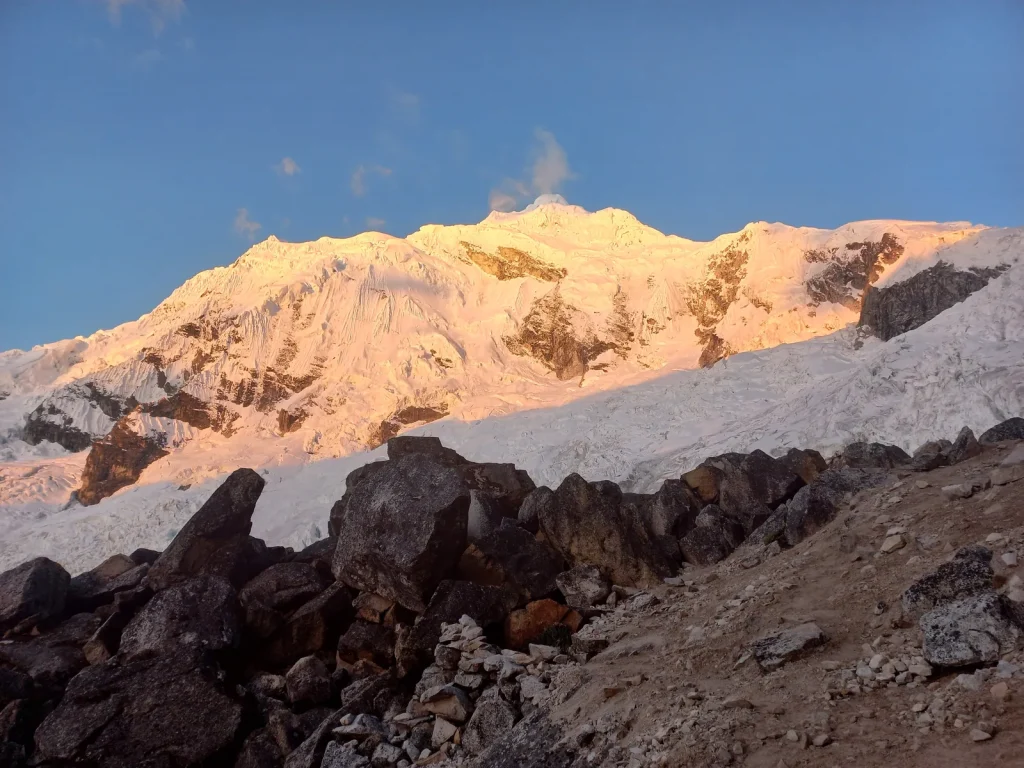
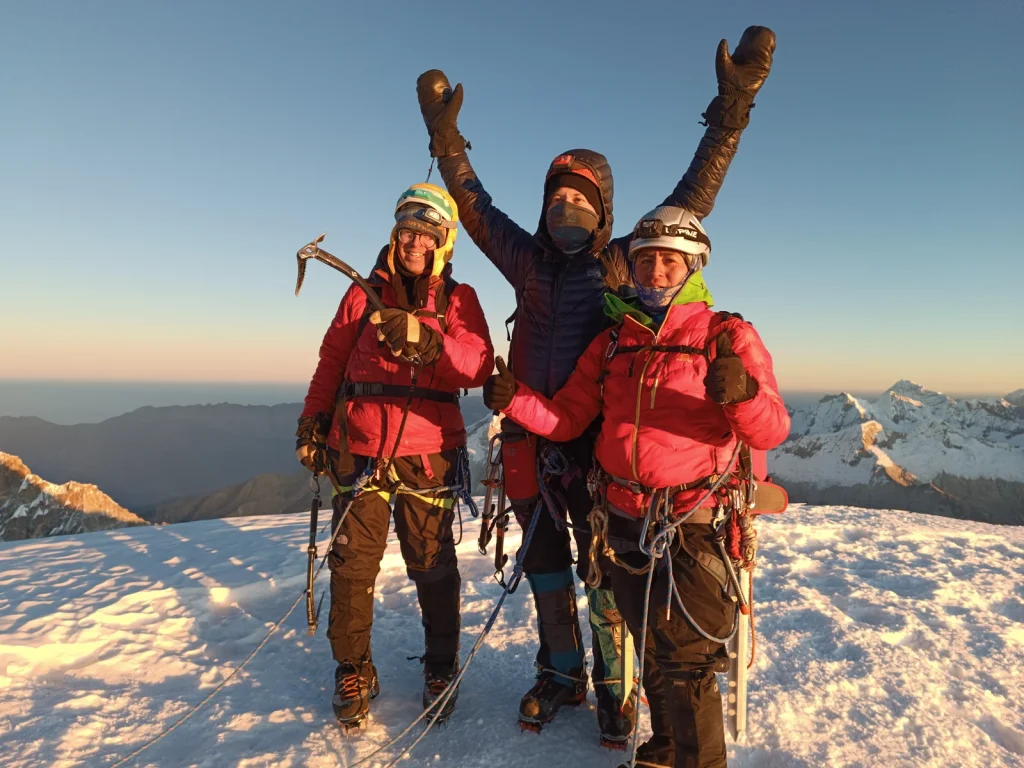
And if conditions allow, the summit attempt provides the opportunity to witness the Andean sunrise from above 6,000 meters.
Photo gallery
1 / 8